
The Future
of CRM
Gone are the days of static databases and one-size-fits-all approaches. Instead, a new era is dawning. CRMs are becoming a dynamic and agile ecosystem. They aim to empower organizations to understand better and engage with their customers.
CRMs, like TigerLRM, are now harnessing the power of artificial intelligence (AI) and automation. You can also use them to unlock the potential of data analytics and social platforms. The future of CRM is brimming with possibilities.
Do you wish to stay ahead of the competition and make the most of this technology? Then, keeping up with the latest CRM trends and emerging best practices is essential.
In this article, we'll explore the current state of CRM and highlight some of the most important trends you should consider. We'll also offer tips on making the most of these trends to stay competitive and succeed. Lastly, we'll review the challenges of using new CRM technologies and provide recommendations on leveraging their benefits.
The current state of CRM
A Customer Relationship Management (CRM) system is a software application that helps businesses manage and organize customer interactions and relationships. These systems store, track, and analyze customer data. They also provide tools for effective customer management.
CRM systems have turned into an indispensable resource for many organizations. In 2022, the global CRM market was valued at $58.82 billion and is expected to grow from $71.06 billion in 2023 to $157.53 billion by 2030.
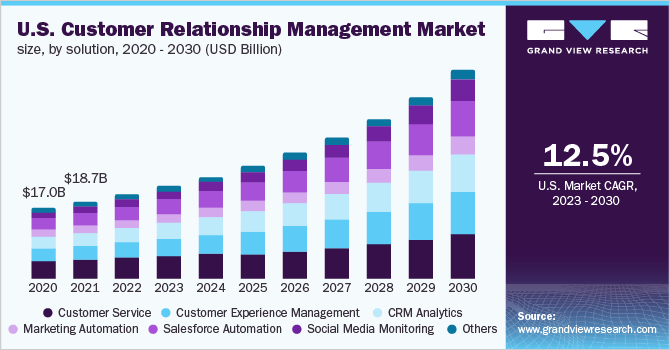
If we look at the history of CRM, we can see that it wasn’t always like this. Before CRM systems, businesses used manual methods and separate systems to manage customers. This fragmentation would lead to inconsistent data, duplicated efforts, and limited visibility of the customer journey.
The introduction of CRM systems transformed the business landscape by addressing these challenges. CRMs offer a unified customer database that sales, marketing, and customer service teams can access. This unification allows for a more coordinated approach to customer management.
What’s more, current CRM systems can leverage analytics and automation. They help businesses be more efficient and provide personalized experiences based on data. Technologies like artificial intelligence (AI) and the Internet of Things (IoT) are shaping the future of CRM. Now, imagine how far we'll go over the next few years.
The future of CRM: key trends impacting CRM in 2024 and beyond
As we step into the future, CRM continues to undergo dynamic transformations. Behind these transformations are cutting-edge technologies and evolving customer expectations. In this section, we explore the key trends that are shaping the future of CRM in 2024 and beyond. We’ll also look at how you can leverage these trends to forge deeper customer relationships and drive sales.
Customer-first approach
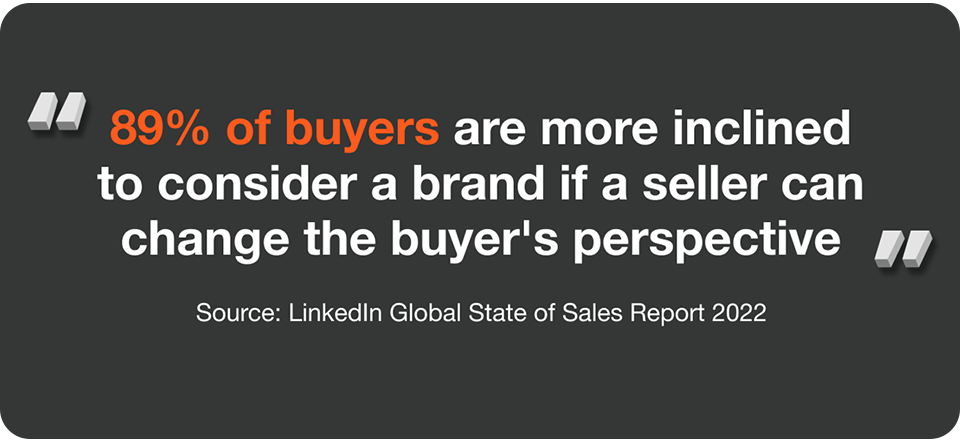
Technology has made it easier to reach your customer base. However, customer success is about customer experience and understanding their needs. 89% of buyers say they want brands to change their thinking.
However, sales professionals face a significant challenge: incomplete customer data. This is where a robust CRM system that fully views the customer becomes invaluable. A CRM stores your customers' contact details, communication history, purchase patterns, and preferences. It holds all this data in one place. Salespeople can use these insights to improve customer interactions and offer personalized solutions. But this only works if your staff documents everything in the CRM and management ensures they adhere to this policy. TigerLRM offers different user levels in its system, one of which is for a Sales Enablement professional who can monitor this and address any shortcomings.
It's crucial to recognize that achieving a customer-first approach goes beyond technology. It requires a shift in mindset and organizational culture. Businesses must prioritize empathy, active listening, and building genuine customer connections. CRM systems can serve as enablers. They provide the tools and data necessary to execute this approach.
The impact of Artificial Intelligence (AI)
AI-driven algorithms are changing how businesses analyze and interpret customer data. Using AI, CRMs can process complex data sets in real time and extract valuable insights. These routine tasks are often too time-consuming for humans to accomplish manually.
Simply put, AI-driven tools are here to make the lives of sales teams easier. Here’s how that may look in practice. TigerLRM has integrated with ChatGPT. This integration allows users to interact with the CRM system conversationally. Users can ask the AI assistant questions like “How do I upload leads?” or “How do I send a mass SMS message?”. AI will retrieve the relevant instructions and present them in an easy-to-understand way. This intuitive approach saves time and removes the need for users to search for specific functionalities manually.
But it doesn’t stop there. Very soon, AI systems may act as virtual assistants capable of executing various CRM tasks. Sales reps can ask for actions like generating a list of calls for the day. ChatGPT will access the CRM data on its own. The AI will then present the information to them. TigerLRM has recently introduced “email sentiment,” a feature that reads emails to determine which ones a salesperson should call first because they are the most positive ones.
These AI-driven enhancements optimize the effectiveness and efficiency of CRM systems.
The role of automation
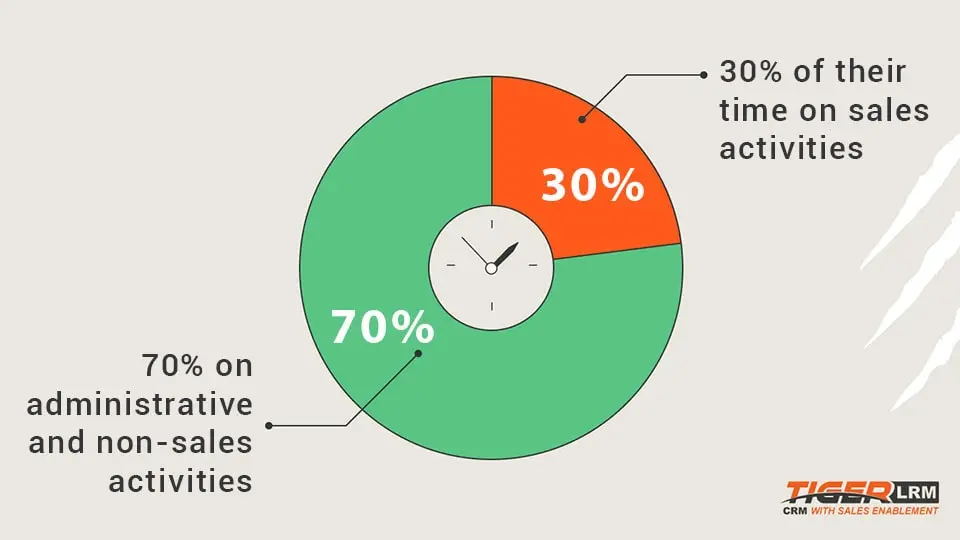
Automation is also playing a key role in the future of CRM tools. Sales reps spend around 30% of their time on selling. They spend the other 70% on administrative tasks and other non-selling activities.
CRM systems can reduce the administrative burden on sales teams by automating repetitive tasks. Sales reps can then concentrate on what they do best. They will have more time to build relationships, nurture leads, and drive sales revenue.
Marketing automation software also minimizes the risk of leads falling through the cracks. Sales teams can use features like auto follow-ups to set up predefined email workflows. Specific actions or events automatically trigger these sequences. This way, you can engage with customers or leads by delivering relevant and timely content to move them through the sales cycle.
You can leverage automation to streamline and optimize CRM processes and reduce manual tasks. This frees up valuable time for sales and support teams to focus on higher-value tasks.
The growing importance of social and mobile CRM
People worldwide spend about 11.5 billion hours each day on social media platforms. Yes, billion. Using social media data in your CRM system lets you track customer interactions, gather valuable insights, and engage with them across various social channels. All of this can happen in one centralized location.
The rise of connectivity goes together with the growing importance of mobile CRM. It's all about convenience and being where the customers are. Mobile CRM applications give sales representatives access to CRM data while on the go. They also offer unique advantages and capabilities. For instance, in TigerRLM the speech-to-text functionality allows them to dictate notes into the app while in the field. Another standout feature is the ability to capture business card information through a photo. The app will automatically convert it into a lead inside the CRM.
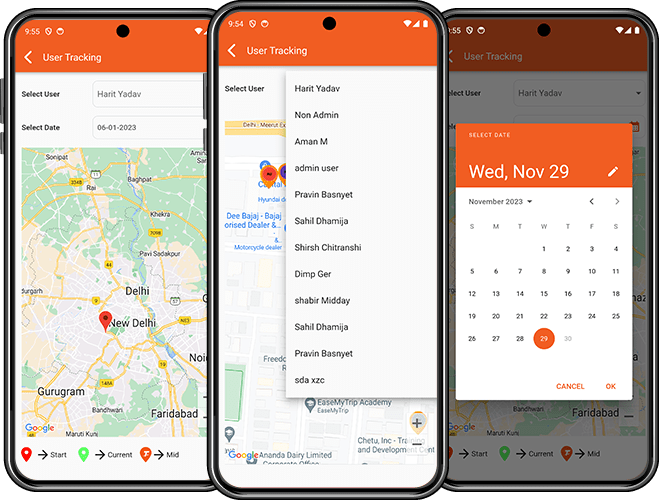
Furthermore, the app offers user-tracking functionality. This feature can ensure the safety of field agents. Additionally, this feature enables organizations to manage schedules easily.
The emergence of voice technology
Experts project that the global speech and voice recognition market will grow from $9.8 billion in 2022 to $28.1 billion by 2027. This market includes technologies such as virtual assistants and voice recognition software. These technologies allow users to communicate with CRM systems through voice commands. They also transform how we interact with and extract information from CRM systems. That's why the emergence of voice technology will significantly impact CRM systems.
We've already seen how the TigerLRM Mobile Application integrates speech-to-text features. This integration removes the need for manual data entry. As voice technology evolves, CRM systems can further leverage its capabilities. This will translate to less manual effort and better productivity.
The growth of CRMs for teams of all sizes
Traditionally, large enterprises have been using CRMs. That’s primarily due to their scale, resources, and complex customer management needs. Large enterprises make up 61.1% of the CRM market. Small and medium enterprises (SMBs) may face some challenges related to the adoption of CRM. SMBs often have limited budgets, IT staff, and fewer resources compared to larger enterprises.
However, the landscape is changing. The SMB segment is forecasted to grow at a CAGR of 15.5% by 2030. Businesses of all sizes and styles need a CRM to meet their growing needs. Here at TigerLRM, we’re proud to say that we are constantly evolving our products and services to meet this change.
And SMBs interested in trying a CRM for the first time don't have to pay an arm and a leg to access comprehensive CRM software. You can access CRM platforms like TigerLRM for free - as your team grows, the platform grows with you.
The integration of new features into CRMs
Of course, the size of the companies using CRMs isn’t the only thing that’s changing. With more, and more diverse customers entering the market, the need for new and specialized CRM tools is also growing. Luckily, at the same time that the needs of businesses are changing, advancements in technology have made it possible to develop more robust and multifaceted solutions that go beyond what a traditional CRM was capable of.
Take, for example, the sales enablement features we have built into the TigerLRM platform. Sales enablement is not a new concept in business and has long been used in conjunction with traditional CRM systems as part of a holistic sales strategy. But CRM systems have traditionally been positioned as completely separate from sales enablement tools.
We felt that by not including the solution-focused aspects of sales enablement tools, the customer-focused CRMs weren’t providing the full picture.
TigerLRM’s CRM solution includes next-gen sales enablement tools that integrate seamlessly with our customer relationship management platform, making it easier for modern sales teams to streamline workflows and increase close rates. We feel that this technology helps our platform stand apart from other general CRM options on the market.
The TigerLRM platform helps sales teams reach new levels of business success with its sales enablement services. TigerLRM's sales enablement services deliver tangible and measurable outcomes by leveraging data-driven insights and advanced analytics.
These services boost the platform's tools by increasing close rates and training speeds and improving playbook policy compliance. Sales teams can save hours every week with lead concierge services, where the sales enablement team provides contact details for prospects and populates the platform. They will even ensure every prospect gets accounted for and worked on so no lead gets left behind.
The future of CRM: Challenges
The future of CRM looks bright. Yet, its adoption doesn't come without challenges. Here are some challenges organizations may face when using CRM systems and strategies to overcome them.
- Security and privacy concerns: Organizations handle sensitive customer data within CRM systems. That's why there’s a rise in security and privacy concerns. To address these concerns, organizations must put in place robust security measures. These can be encryption, access control, and regular security audits. It’s important to choose CRM vendors with strong security practices and compliance certifications.
- Integration with existing systems: Organizations may have data stored across different platforms. This may make consolidation and migration complex. Look for a CRM that offers custom integrations with your existing tech stack.
- The need for skilled professionals: A CRM system's success hinges on user adoption and knowledge. A CRM with sales enablement features can provide comprehensive resources to help sales professionals get up to speed.
Future-proof your business with a dynamic CRM
Emerging trends and technologies are transforming the way businesses interact with their customers. They offer new opportunities for engagement, loyalty, and growth. Businesses of all sizes now have more tools than ever at their disposal. They can use these tools to understand their audience's needs and provide personalized experiences that meet expectations and business goals.
Embracing new CRM technologies isn't without its challenges. But organizations shouldn’t let that stop them. The benefits far outweigh the challenges.
Providing a single source of truth, TigerLRM allows marketing, sales, and customer success teams to see the entire customer lifecycle. With real-time data and customer intelligence, our sales enablement team can support you to improve customer engagement, retention, and loyalty.
Investing in CRM is an investment that can set up your business for future success. Contact us to learn how TigerLRM can help you grow your business by improving customer relationships.

How to assign a user to become a sales enablement professional in your TigerLRM Dashboard.
To assign a sales enablement user, simply go to Administrator > User Management > Edit User.
Once you are on the user's information, you can select if you want them to be "Non-Admin," "Admin," or part of the "Enablement Team." Save this information, and your desired user will have the right access.
You can access your Dashboard here.