How to Maximize Your B2B Sales Funnel in 7 Steps For 2024
In today’s fiercely competitive sales landscape, it’s more important than ever to optimize your B2B sales funnel. A robust sales funnel isn't just a nice-to-have — it's a must-have — especially if you want to increase conversions and make your business more profitable in the face of rising costs.
But how exactly do you transform your B2B sales funnel from ordinary to extraordinary? Today, we’ll show you how.
In this article, we’ll clarify what a B2B sales funnel is, why you should revise your existing funnel, and the seven steps we recommend every business use to do so.
The B2B sales funnel: A primer
Your company’s B2B sales funnel is the sequence of stages potential customers go through before becoming a customer. It’s not a physical funnel or a prescribed buying journey that every customer must go through. It’s simply a visual representation of your sales process, allowing you to optimize your tactics and convert more potential customers.
All B2B companies will have slightly different sales funnels but follow a very similar process. That includes having the same funnel stages, which typically look something like this:
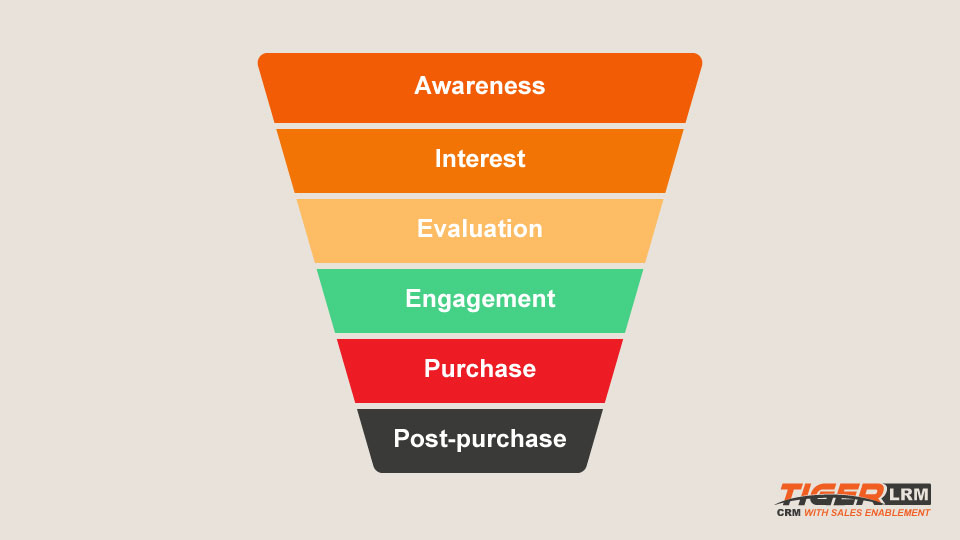
As you can see from the image above, the volume of prospects gets smaller as you move down the funnel. While you may have a lot of prospects at the awareness stage, a good amount will fall out of your sales funnel by the time you get to the interest, evaluation stage, or purchase stages.
While you should try to convert as many prospects as possible from one stage to the next (and we’ll discuss strategies to help you do so below), don’t worry when leads fall out of your funnel. You’ll never convert everyone.
What you need to look for — and the reason we recommend regularly revisiting your B2B sales funnel — are the stages where you are losing many potential customers. If you can find them and figure out what’s going wrong, you’ll improve your team’s sales record.
Why you should take another look at your B2B sales funnel
You’ve probably built a B2B sales funnel for your business already. However, analyzing your sales process and creating a funnel isn’t a one-off task. We recommend you evaluate and revise your B2B sales funnel every six months for the following reasons:
Increase conversion rates
The more refined your B2B sales funnel, the easier it'll be for your sales reps to convert prospects into B2B customers. Without a visualized funnel, it might not be obvious which leads are at what stage of the customer journey. But when you map everything out, your reps can see which lead is where and what actions they should take to move them further down the funnel. They can even start personalizing their interactions based on the part of the funnel prospects are currently sitting in.
Make data-driven decisions
We live and breathe data at TigerLRM. We believe data should rule decisions, and numbers don’t lie. That’s why we think it’s important to revise your B2B sales funnel to improve tracking and KPIs. The more information you can gather about how prospects move through your sales process, the better placed you’ll be to make changes that result in better conversions.
Mapping your sales funnel will also let you make data-driven decisions about your wider strategy. By understanding how many prospects are at each stage, you can accurately forecast future revenue levels by combining that data with the average time each deal takes to complete. You can also use this information to make hiring decisions and budget appropriately.
Improve audience understanding
An ICP will only take your team so far. A B2B sales funnel is a visualization of your prospects' average buyer journey. What better way to understand how they behave than by creating a funnel?
The more you analyze your sales funnel, the more you learn about your best prospects. For example, you’ll quickly learn which characteristics the prospects who move through your funnel quickly share or the characteristics that make users long-term customers. In an ideal world, the characteristics of these two different types of prospects will be the same. But you’ll likely learn that you need to focus on one demographic over another to achieve long-term success.
Better lead qualification
Your sales team is most productive when they spend their time on the best quality leads with the highest conversion chances. Only by building a thorough and detailed sales funnel can you identify which stage of the process each prospect is at and how best to move them forward.
Use These 7 Steps to Improve Your B2B Sales Funnel in 2024
Whether it’s your first time creating a B2B sales funnel or revising your existing model, these seven strategies will help you make it as effective as possible.
Map buyer touchpoints to different parts of the funnel
Knowing who you can consider your best B2B customers to be is one of the benefits of revising your B2B sales funnel. Remember, you aren’t trying to sell to everyone. But you shouldn’t use the same strategies to sell to your target audience at every stage of the funnel.
You can optimize your sales approach by identifying the most appropriate and effective marketing channels for each stage of your B2B sales funnel. And you do that by mapping buyer touchpoints to each part of the funnel.
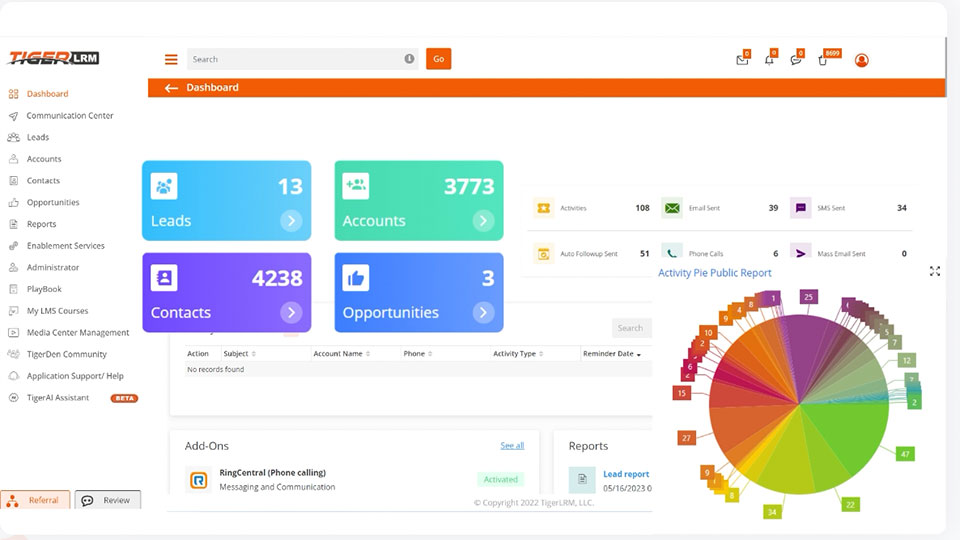
Look at how each prospect comes into contact with your business, what content they consume, and how they speak to your sales reps. Do this for every stage of the sales funnel, and you’ll quickly understand exactly how potential buyers behave at every stage of their journey and the kinds of things they are looking for to move further down the funnel and make a purchase decision.
Create sales enablement material for each stage of the funnel
It’s not enough to have a single gated eBook targeting users at the start of your sales funnel. You need to have great content marketing material for every prospective buyer to devour at every stage of the sales funnel.
This content can come in a range of forms, including:
- Blog posts
- Infographics
- eBooks and white papers
- Product landing pages
- Case studies
- Video testimonials
The trick is using the right piece of content at the right time. At the very top of the sales funnel, prospective buyers aren’t looking to make purchase decisions; they’re trying to solve a problem. Informational blog content is great here.
But that kind of content won’t cut it further down the funnel where prospects are comparing your company to a competitor. In this instance, they need sales-focused content, like a case study.
Creating this content isn’t enough. You need to ensure your sales team has access to all of your assets to serve the relevant piece to prospects at exactly the right time.
That’s why we integrated a Sales Asset Management solution into our CRM — so that sales reps always have quick access to all your collateral in one place.
Don’t forget about the post-purchase experience
The B2B sales funnel doesn’t end when prospects make a purchase. Existing customers still hold a huge amount of potential value. They are fantastic social proof, can refer to new prospects, and make additional purchases.
You must adopt strong customer success and retention strategies to build customer loyalty and create repeat B2B buyers.
How can your customer success and sales teams achieve this? By keeping lines of communication open and providing exceptional service. In other words, strong post-purchase engagement.
The better each customer’s experience with your brand, the more likely they’ll be to recommend you to friends and colleagues in the future. Sales teams should also regularly check in with existing customers to understand whether their business needs have changed or if they know of anyone else experiencing the kind of problems your product has solved.
Automate as much as possible
One of the main reasons for creating a B2B sales funnel is to help your sales team prioritize the best prospects. You can improve the sales and marketing funnel further by implementing automation into your sales process to handle a lot of the manual busy work that eats up a seller’s time.
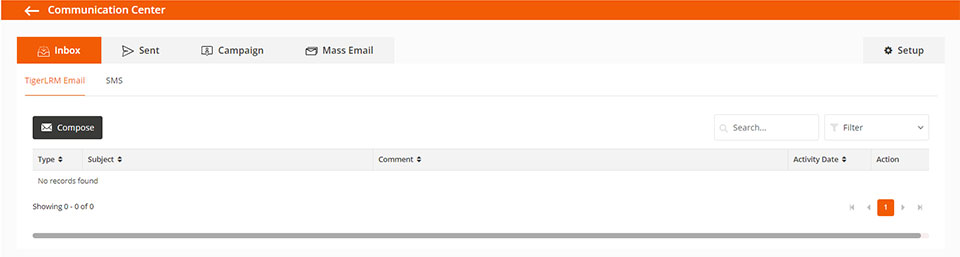
This is one of the main reasons automation capabilities come baked into our CRM. Our AI technology allows sales reps to set up an outreach schedule complete with follow-ups once and then run it automatically for every lead. So once prospects reach a certain stage of your funnel, sales reps can nurture them automatically with engaging emails and content until they are ready to move further down the funnel.
Train your team
One of the easiest, yet often overlooked, ways to improve your B2B sales funnel is to provide regular training for your sales team. Yes, you should have a thorough onboarding process that explains your business’ unique sales strategy. You also need to provide regular updates and reminders to experienced sales reps and tailored coaching to help them improve. Examining any lost leads and training your sales team on anything they may have missed can be vital to making sure you snag the next one. It’s important to delve into whether or not there were any missteps or oversights that led to a lead being lost, including important facets like need assessment and affordability. That way, you don’t let any leads slip through the cracks next time.
The better the reps can follow your playbook, the quicker they’ll be able to move prospects down the sales funnel.
Consider specializing your sales team
The skills you need to progress prospects at the top of the B2B sales funnel aren’t the same as the skills you need at the bottom. At the top of the funnel, sales reps need to qualify and nurture a significant number of prospects. Further down the funnel, sales reps need to give one-to-one attention to each lead, and sales skills become much more important.
You can leverage this knowledge to improve the efficiency of your funnel by creating specialist sales roles such as SDRs and closers. Hire sales development representatives (SDRs) to focus on top-of-funnel prospects. These are younger, less experienced reps, so their lack of sales skills won’t matter so much. Moreover, the top of the funnel is a great place for them to hone their skills. Then, have your experienced account executives who are better at making a sales pitch focused on closing prospects at the bottom of the funnel using a product demo.
Don’t leave leads behind
No lead left behind should be a core strategy in any sales organization. Every lead costs your business money, which means you leave money on the table when you don’t follow up with all of them. Unfortunately, few businesses have a structured system in place to make reps contact and qualify every lead. That makes for a very leaky funnel.
To fix this issue, we offer a capture-to-close lead lifecycle management solution that ensures every lead your business generates gets worked on. We build a personalized system that defines exactly how leads should be contacted, how many times they should be followed up, and a list of questions that need to be answered. We’ll even automate the process using our Customer Relationship Management platform’s AI capabilities and automatically assign qualified leads to the relevant sales professional once they’re a sales-qualified lead.
Fix your funnel with TigerLRM
Creating a detailed and effective sales funnel isn’t just a value-added task you can pick up in your downtime. Nor is it a one-off task you can forget about. If you’re serious about creating an effective sales team, you must revisit and revise your sales funnel every six months.
It can be time-consuming, so we don’t blame you for putting it off. But doing so can impact your revenue potential. That’s the reason we provide a sales enablement service alongside our free CRM. Our experts will regularly model your sales funnel to define your buying process better, identify areas of weakness, and highlight ways to improve. Fix your leaky funnel by booking a demo today.

How to assign a user to become a sales enablement professional in your TigerLRM Dashboard.
To assign a sales enablement user, simply go to Administrator > User Management > Edit User.
Once you are on the user's information, you can select if you want them to be "Non-Admin," "Admin," or part of the "Enablement Team." Save this information, and your desired user will have the right access.
You can access your Dashboard here.